
Mastering the Most Popular Casino Games Without Breaking the Bank
Casino games are structured activities of chance and skill, typically featuring wagers on outcomes determined by random number generators or physical mechanics. These games, from blackjack and roulette to slot machines, operate on established rules that create a predictable house edge while offering players the potential for monetary rewards. Mastering basic strategies for games like blackjack can reduce the house advantage, directly improving a player’s odds and extending their engagement with the experience.
Understanding the House Edge
The house edge is the mathematical advantage built into every casino game, ensuring the casino profits over time regardless of short-term player wins. In games like roulette, the edge comes from the extra green zero, while blackjack’s edge fluctuates based on the specific rules and your strategy. Understanding this percentage directly impacts your bankroll: a lower house edge, like in baccarat’s banker bet (around 1.06%), gives you a better chance to play longer. Choose games with the smallest house edge to maximize your potential returns. Always learn the specific edge for each bet you make, as side bets often carry a significantly higher house advantage. Even a half-percent difference in the house edge can drastically alter your long-term expected losses. Stick to bets where your risk is minimized.
The Mathematics Behind Every Wager
Every wager in a casino game is governed by fixed probabilities and payouts that dictate the mathematical expectation of each bet. For a single zero roulette wheel, the true odds of hitting a number are 36-to-1, but the payout is only 35-to-1, creating a negative expectation for the player. In craps, the Pass Line bet has a house edge of 1.41% derived from the 251-to-244 true odds versus the even-money payout. Blackjack’s edge shifts with the deck composition, but basic strategy relies on the math of bust probabilities versus dealer outcomes. Video poker paytables are calculated from the 52-card deck’s combinatorial probabilities.
- True odds always differ from payout odds, ensuring the house retains a percentage edge.
- Probability calculations for dice outcomes (e.g., 7 has a 16.67% chance, pays only 4-to-1) favor the house.
- Slot machine RTP is fixed by the random number generator’s mathematical hit frequency multiplied by payout ratios.

How Payout Percentages Shape Player Decisions
Payout percentages, often called Return to Player (RTP), directly shape player decisions by serving as a mathematical guide for potential long-term returns. Players compare RTP values across games to prioritize those with higher percentages, such as blackjack or video poker, over lower-paying slots. This influences game selection, betting strategy, and session length, as players aim to maximize theoretical returns over time. A clear sequence often emerges in decision-making:
- Identify the game with the highest available payout percentage.
- Calculate expected losses based on that percentage and intended wager size.
- Choose a betting pattern that aligns with the game’s volatility to preserve bankroll.
Higher percentages do not guarantee short-term wins, but they consistently steer player behavior toward games with reduced house edge.
Volatility vs. RTP: What Matters Most
RTP tells you the theoretical return over millions of spins, but volatility dictates your actual session experience. A high-RTP slot with extreme volatility can drain your bankroll quickly before any payout arrives, making RTP feel irrelevant in the short term. Conversely, a lower-RTP game with low volatility keeps your balance stable with frequent small wins, offering longer playtime. Your choice depends on whether you chase rare, life-changing hits or prefer steady, modest returns.
| Factor | RTP | Volatility |
|---|---|---|
| Primary focus | Long-term payout percentage | Risk and win frequency |
| Best for | Bankroll planning over time | Matching your session tolerance |
| Short-term relevance | Low, due to variance | High, defines daily reality |
Classic Table Games Deep Dive
A Classic Table Games Deep Dive reveals that mastering Blackjack hinges on perfect basic strategy, which mathematically cuts the house edge to under 0.5%. In Roulette, focusing on European single-zero wheels over American double-zero versions nearly halves the casino’s advantage. For Craps, prioritizing Pass Line bets with full Odds offers the lowest house edge among all felt options. Baccarat demands a disciplined approach: always betting the Banker, as it wins slightly more often than the Player. These games thrive not on luck, but on understanding odds, bet sizing, and rule variations—giving players real influence over their session outcomes.
Strategic Depth in Cards
In classic table games, strategic depth in cards transforms chance into a calculated contest. In blackjack, mastering basic strategy and card counting allows you to minimize the house edge, while in baccarat, disciplined betting on the banker leverages a low inherent advantage. Poker variants like three-card poker require knowing when to fold weak hands versus raising with strong ones, a skill that separates amateurs from consistent winners. The key is decision-making under probability constraints, where every action directly affects your long-term outcomes.
Strategic depth in cards means wielding knowledge of odds and opponent psychology to turn random deals into profitable decisions.
Betting Systems That Actually Work
In classic table games, the Martingale system—doubling bets after losses—recovers previous losses with a single win, but it requires an unlimited bankroll and faces table limits that break the progression. The Paroli system, increasing bets after wins, capitalizes on streaks while limiting risk, making it more sustainable for short sessions. The D’Alembert system, a safer flat-variation where you adjust bets by one unit after wins or losses, moderates volatility. None guarantee profit over time, as they cannot alter the house edge’s mathematical certainty. Practical use demands strict bankroll management and session caps to exploit temporary variance.
Betting systems manage risk and chase short-term streaks, but no system overcomes the built-in house advantage over extended play.

Navigating the Layout
When you sit down at a classic table game, the felt in front of you is your command center. For blackjack, your eyes should lock onto the betting circle and card positions, ensuring your chips are placed squarely within the designated area before the dealer signals “no more bets.” In roulette, the layout demands you memorize the difference between inside and outside bets; your chips must land cleanly in a numbered square or within the broader payout zones. A simple slip of the wrist can turn a straight-up bet into a split by landing on the line between numbers. For craps, focus on the pass line and the large proposition box directly ahead—avoid leaning over to place chips, as the crew prefers you to gently toss them onto the felt for each bet.
Slot Machines: More Than Spinning Reels
While slot machines are the most visible and accessible casino games, they are significantly more complex than simple spinning reels. Players interact with sophisticated random number generators that determine each symbol combination, making every spin independent of the last. Modern slot machines incorporate multiple paylines, bonus features, and themed narratives that require understanding paytables and volatility levels. Unlike table games where skill influences outcomes, slot machines offer a purely chance-based experience with predetermined payout percentages. The experience of Slot Machines: More Than Spinning Reels lies in recognizing how features like wilds, scatters, and progressive jackpots fundamentally change gameplay dynamics compared to other casino games.
Random Number Generators Explained
At the core of every modern slot machine lies the Random Number Generator (RNG), a complex algorithm that continuously generates thousands of number sequences per second, independent of any previous outcomes. When you press spin, the RNG seizes the exact millisecond’s number and maps it to a reel position, ensuring each result is completely independent and unpredictable. This process guarantees true randomness, as the RNG never retains memory of past spins. Provably fair systems rely on this cryptographic foundation to verify that the casino cannot retroactively alter results.
An RNG is a deterministic algorithm that mimics true randomness, ensuring every spin’s outcome is statistically independent of the last, making prediction impossible.
Progressive Jackpots and Their Mechanics
Progressive jackpots pool a fraction of each wager into a shared prize, causing the top payout to grow continuously until one lucky spin hits the winning combination. Unlike fixed jackpots, these networked pools can span multiple machines or online games, creating life-changing payout potential that resets to a base amount after a win. A key mechanic involves the random seed or a secondary trigger—often a special symbol or bonus round—that determines eligibility. Every spin directly contributes to the escalating total, making each play a direct wager on a rapidly climbing reward.
Progressive jackpots aggregate player bets into a rising prize pool, awarded via a random or symbol-based trigger, resetting after a win.
Bonus Features That Boost Engagement
Modern slot machines transform simple spins into interactive journeys through innovative bonus features that boost engagement. Free spins with multipliers can turn a small bet into a cascade of wins, while pick-and-click games reward players for making choices, creating a sense of control. Cascading reels that trigger chain reactions keep the action non-stop, and sticky wilds lock in place for repeated chances at bigger payouts. These layers of interactivity prevent monotony, making each session feel fresh.
| Feature | Engagement Boost |
|---|---|
| Free Spins | Extends playtime with zero cost |
| Pick-and-Click Games | Adds decision-making and suspense |
| Cascading Reels | Creates continuous action |
| Sticky Wilds | Builds anticipation for bigger wins |
Live Dealer Experiences
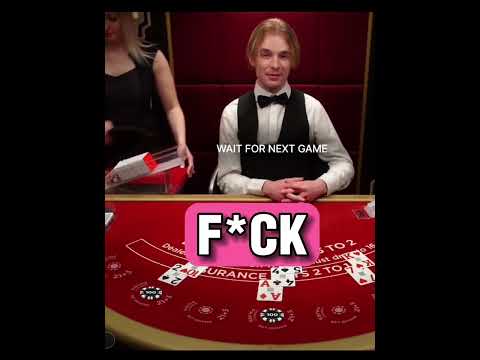
For a truly immersive live dealer experience, the key is balancing real-time interaction with game speed. In casino games like blackjack or roulette, you must manage the dealer’s pace, as they pause for bets and decisions. A crucial strategy is betting limits: always check the table’s minimum and maximum before joining to avoid frustration. The most overlooked advantage is observing the shoe’s shuffle and card handling in real-time for baccarat or blackjack, offering a level of transparency impossible with random number generators. Master the chat function to ask for specific camera angles, but keep questions brief to maintain the game flow.
Real-Time Interaction from Home
Real-time interaction from home lets you see a dealer shuffle cards or spin a roulette wheel through a low-latency video stream. You can type messages to the dealer, who responds vocally, and often see other players’ chat. This creates a sequence of engagement: first, you log into a live lobby; second, you choose a table with an open seat; third, you place your bet via an on-screen interface; fourth, you watch the dealer conduct the round in real time; fifth, you receive instant win notifications. This setup lets you experience authentic casino table dynamics without leaving your living room.
- Select a game from the live lobby.
- Join an open betting seat.
- Place your digital chip bet.
- Observe the dealer’s real-time action.
- Receive immediate payout or loss.
Streaming Technology and Game Flow
Seamless real-time HD streaming is the backbone of immersive live dealer flow, erasing perceptible lag between your bet and the dealer’s action. Multi-angle camera setups switch dynamically to follow the shoe or roulette wheel, ensuring you never miss a dealing nuance. Adaptive bitrate technology adjusts to your connection, preventing buffering that disrupts game rhythm. This frictionless video pipeline keeps decision timers fair and the game moving at a natural pace, replicating the energy of a brick-and-mortar floor without technical interruption.
Comparing Virtual vs. Human-Hosted Tables
When choosing between virtual and human-hosted tables, the core trade-off is pace versus authenticity. Virtual tables offer faster gameplay for strategic grinding, as automated dealing removes dealer decision times, allowing more hands per hour. Human-hosted tables, however, provide real-time interaction and a social layer that virtual algorithms cannot replicate. For players prioritizing realism, human dealers build trust through visible card handling and conversational banter. The practical sequence for decision-making is:
- Assess your session goal: rapid volume (virtual) or immersive experience (human).
- Consider your tolerance for delays: human tables involve shuffle and chat pauses.
- Evaluate decision support: virtual tables often display clearer statistical overlays.
Your choice directly impacts both your time investment and emotional engagement at the table.
Skill vs. Luck in Betting
In casino games, the line between skill and luck is rigidly defined by the game’s design. Games like blackjack and video poker offer a genuine skill component through strategic decision-making, allowing you to influence the house edge. Conversely, slots and roulette are purely luck-based, as each outcome is entirely random and independent. The critical distinction is that skill can reduce the house edge but never eliminate it; luck dictates the final result. Which type should a smart bettor choose? The answer depends on your goal: if you want a chance to employ strategy and minimize losses, skill-based games are superior, but if you seek pure entertainment with no responsibility for the outcome, embrace the luck of the machines.
Games Where Player Choices Shift Odds
In certain casino games, your decisions directly influence the house edge. Blackjack is the prime example, where using basic strategy chart decisions can dramatically shift odds in your favor, cutting the house advantage to under 1%. Video poker similarly rewards smart play: holding the right cards versus chasing flushes changes your long-term payout percentage. Even craps offers choice-based odds shifts—taking full odds behind a pass line bet reduces the overall house cut. Player agency here isn’t about luck; it’s about math.
| Game | Key Choice | Odds Impact |
| Blackjack | Hitting vs. standing on 16 vs. dealer 10 | Reduces house edge up to 2% |
| Video Poker | Holding two high cards vs. four to a flush | Changes expected return by 5–10% |
| Craps | Taking full odds on pass line bet | Cuts house edge to near zero |
Purely Chance-Based Entertainment
Purely chance-based entertainment in casino games means outcomes are entirely random, with no player decision altering results. Random number generation governs every spin, roll, or deal, making strategy irrelevant for games like slots or baccarat. You accept inherent volatility, where winning relies solely on luck over probability. This format offers clear rules and instant resolution, removing the illusion of control found in skill-based games.
- Slots rely on a programmed RNG, giving each spin identical odds regardless of previous results
- Roulette wheels offer fixed math where past spins never influence future numbers
- Craps dice outcomes are independent, with no bet type improving your overall house edge
Mastering Game-Specific Techniques
Mastering game-specific techniques transforms pure chance into a contest where skill tips the scales. In games like blackjack, basic strategy charts dictate every hit or stand based on your hand and the dealer’s upcard, mathematically reducing the house edge. For craps, learning the optimal betting across pass line and odds can sharpen your approach. Video poker demands memorizing which cards to hold for each hand ranking to maximize payback. Even a slight deviation from correct play in baccarat’s player or banker bets erodes your limited control over the outcome. Poker players study position, pot odds, and opponent tendencies to exploit timing. Without drilling these specific methods, you’re just rolling dice and hoping.
Mobile Gaming Revolution
The mobile gaming revolution turned my evening commute into a private casino floor. Last Tuesday, I sat in the back of a bus, thumbing a digital blackjack hand while the city blurred past. The screen mimicked the felt’s texture, the shuffle felt instant, and the dealer’s avatar tipped its hat after I doubled down. It wasn’t a simulation—it felt real. Mobile gaming compressed the casino’s weight into my pocket, letting me place a bet between sips of coffee or during a rain delay. This shift transformed waiting rooms and train platforms into personal tables, where a slot spin or a bluff unfolded without a chip in sight.
How does mobile gaming change a card game’s rhythm? It allows you to fold a weak hand while walking your dog, then raise the stakes on a full house from your kitchen counter.
Optimized Interfaces for On-the-Go Play
Modern casino games have ditched cramped buttons for thumb-friendly layouts designed specifically for on-the-go play. Controls now float responsively, keeping your most-used actions—like spin or double—within easy reach of your natural grip. Swipe gestures handle bet adjustments, while tilt sensors can shake dice or reels physically. The interface automatically collapses menus between actions to maximize visible table space, then expands them only when your finger hovers nearby. Q: How do these interfaces prevent accidental double-taps? A: They use a short “touch-lock” window after each input, so your phone bumping against your pocket won’t place a bet.
Touchscreen Controls and Gesture-Based Bets
Touchscreen controls replace physical buttons with direct taps to place chips, spin slots, or deal cards, enabling faster interactions in mobile casino games. Gesture-based bets allow players to swipe upward to increase wagers or pinch the screen to adjust bet spreads on blackjack and roulette layouts. A long press on a virtual card can reveal game history, while a two-finger swipe might split pairs or activate side bets. These inputs reduce misclicks by requiring deliberate motions, enhancing precision in fast-paced rounds. Gesture-based betting also supports swipe-to-double actions for craps odds or poker raises, adapting tactile feedback from smartphones to casino mechanics.
Touchscreen and gesture inputs streamline betting actions, replacing tedious menus with intuitive swipes, taps, and pinches for precise wager adjustments and game control.
Cross-Platform Progress and Syncing
Cross-platform progress and syncing in casino games erases the gap between devices, letting you move from your desktop to mobile mid-session without losing a spin. All wager history, chip balances, and unlocked slot themes are saved to your account, not a local device. For a clear start, follow this sequence:
- Log into the same casino account on any device.
- A cloud sync instantly updates your currency balance and free spin count.
- Closed beta features, like bonus round progress, carry over in real time by saving to the cloud.
This seamless handoff keeps your loyalty rewards intact every time you switch screens.
Bankroll Management Essentials
Bankroll management essentials transform casino games from reckless fun into calculated play. Before any spin or hand, set a strict session limit you can afford to lose entirely. Divide that total into smaller betting units, typically 1% to 2% of your bankroll per wager, ensuring a bad streak won’t wipe you out. Never chase losses by raising bets; instead, stick to your predetermined unit size. Walk away after doubling your bankroll or hitting your loss limit—discipline here is the real edge. Strict bankroll management keeps you playing longer and reduces emotional decisions, letting variance work in your favor without risking financial harm.
Setting Limits Without Sacrificing Fun
Think of your bankroll as your ticket to play, not a savings account you need to protect. Smart bankroll boundaries actually keep the fun alive by removing the stress of potential losses. Set a strict session loss limit before you sit down, and when you hit it, walk away grinning—you’ve already won by staying in control. Similarly, decide on a win goal, like doubling your buy-in, then lock up those profits. This turns every session into a contained adventure where the thrill stays high and regret stays out. By capping your exposure, you guarantee that casino games remain pure entertainment, not a source of anxiety. Embracing these limits frees you to enjoy the action without wondering if you’ll regret it tomorrow.
Stake Sizing Based on Session Goals
Session goals directly dictate stake sizing in casino games. For a conservative goal of extending playtime, use a flat betting approach with stakes no higher than 1% to 2% of your session bankroll. Conversely, a profit target, such as doubling your buy-in, allows for slightly higher stakes but requires strict win/loss limits to avoid chasing losses. For rapid, aggressive goals like hitting a single jackpot, stake sizing may reach 5% of the session bankroll, though this increases variance significantly.
Q: How does a “double-up” session goal affect stake size?
A: To double a session bankroll, stakes should be raised proportionally—typically 3–5% per bet—balanced against a hard stop-loss at half your initial bankroll to mitigate catastrophic loss.
Tracking Wins and Losses Constructively
Tracking wins and losses constructively means recording every bet’s outcome in a dedicated log, not just during a session but over weeks, to identify true variance versus skill deficits. This data reveals harmful patterns, like chasing losses or overplaying winning streaks, allowing adjustment of bet sizes. Disciplined session tracking prevents emotional decisions by grounding play in factual performance metrics. Loss limits, derived from historical data, should be adjusted only after reviewing 20+ logged sessions.
Constructive tracking transforms raw win/loss data into actionable insights, preventing bankroll erosion through evidence-based adjustments.
Variations Across Cultures
Variations Across Cultures in casino games significantly alter gameplay and strategy. In Asian casinos, baccarat often shifts from the Western “Player/Banker” rules to a “No Commission” format, where a winning Banker on six pays only half. Blackjack in Europe may enforce a “No Peek” rule, preventing dealers from checking for blackjack until after players act, contrasting with American “Obo” (Original Bets Only) and “CSM” (Continuous Shuffle Machines) prevalent in Spanish casinos. Punto Banco baccarat dominates in Macau and the US, while Chemin de casinous online casino Fer, where players bank against each other, persists in French private rooms. Even craps sees change: UK casinos often cap odds bets lower than US properties, directly affecting house edge. User preference between these cultural rule sets dictates bankroll management and betting patterns.

Regional Favorites Beyond Standard Options
In Italy, locals bypass standard roulette for Calcio Scommesse, a live dealer game where bets hinge on actual soccer match events rather than random spins. Philippine hubs like Okada Manila spotlight *Baccarat de la Carte*, a private table format where players draw cards from a physical shoe, skipping automated shuffles. Brazilian casinos replace traditional poker with *Truco Paulista*, a fast bluffing game using Spanish-suited cards and regional hand rankings. These alternatives deliver authentic cultural gameplay absent from generic global offerings.
Regional favorites transform casino floors by prioritizing localized rules and social dynamics over universal templates, giving players a distinct, culturally relevant experience.
Historical Roots of Popular Formats
The historical roots of popular formats in casino games often trace back to specific cultural gaming traditions. Modern roulette evolved from 17th-century French “Roly-Poly” and Italian “Biribissi,” while baccarat originated from an Italian card game called Baccara. Blackjack descends from the Spanish “Veintiuna” and French “Vingt-et-Un.”
- Craps evolved from the English dice game “Hazard,” brought to America by colonizers.
- Poker’s format combines Persian “As-Nas” and German “Pochspiel” influences.
- Sic Bo’s structure is rooted in ancient Chinese lottery and dice traditions.
Local Rules That Change the Dynamics
In baccarat, some Asian casinos enforce a “no commission” rule on Banker wins, altering payout odds and shifting player strategy toward the Banker bet. For blackjack, European and Australian tables often prohibit late surrender, while Macau dealers stand on soft 17—both changes significantly adjust house edge dynamics. Caribbean stud poker varies regionally, with certain jurisdictions requiring a dealer qualifying hand of ace-king or higher, directly impacting when players lose their ante.
- French roulette’s “En Prison” rule reduces the house edge on even-money bets when the ball lands on zero.
- In Pai Gow Poker, some American casinos allow players to set their hand themselves, altering the push rate compared to dealer-set variants.
- Spanish 21 uniformly removes all 10-value cards, but local rules regarding bonus payouts for 7-7-7 hands change strategic splitting decisions.
Psychological Pull of the Floor
The floor is not just a surface—it is a gravitational anchor for the player’s focus. In the hushed air of a casino, the carpet’s pattern directs your eyes downward as you walk, subtly pulling your attention from the ceiling’s spectacle to the machines at your feet. This is the psychological pull of the floor in action: a design that makes you feel grounded in a zone of chance, where the flicker of lights and the chime of coins rise from below rather than above. It creates an intimate pocket of reality, distancing you from clocks and windows. Q: Why does the floor matter so much? A: Because it roots your gaze near the payout tray, keeping your mind on the next roll or spin rather than the world outside. This pull turns the simple act of walking into a guided drift toward the next game.
Near-Misses and Dopamine Loops
A near-miss, such as seeing two matching slot symbols stop just short of a third, triggers a potent dopamine loop in the brain. This neural reward system treats the near-win almost identically to an actual win, releasing dopamine that reinforces the desire to continue playing. The player’s brain interprets the near-miss as evidence that they are “learning” or “getting close,” which overrides rational understanding of randomness. This creates a cycle: the near-miss increases arousal, the dopamine spike motivates another spin, and the subsequent near-miss repeats the loop. The psychological effect is a sustained commitment to the game despite repeated losses.
- A near-miss occurs, closely simulating a win.
- The brain releases dopamine, treating it as a reward signal.
- This reinforces the player’s belief that a win is imminent.
- The player initiates another bet, driven by the near-miss dopamine loop.
- The cycle repeats, deepening behavioral engagement.
Lighting, Sound, and Environmental Design
Subdued lighting focuses attention on individual game screens, minimizing peripheral distractions, while sonic layering of machine jingles and ambient noise creates a cocoon of isolated play. Environmental design uses carpet patterns and low ceilings to deaden sound, preventing audio bleed between zones. The loss of external time cues from windowless spaces and constant artificial light reinforces continuous engagement. Why does casino design avoid natural light and clocks? To dissolve temporal awareness, keeping players immersed in the game’s rhythm without external interruption.
Social Proof and Encouraging Continued Play
In casino games, the psychological pull of the floor is amplified by social proof encouraging continued play. When players observe nearby winners triggering celebratory sounds or lights, it creates a validation effect that normalizes further wagering. Seeing repeated small wins from others suggests the game is “due” to pay, reducing the perceived risk of continuing. This herd mentality overrides personal loss thresholds, as individuals rationalize that the collective experience proves persistence yields rewards. The floor design intentionally exposes players to these cues, leveraging observed behavior to sustain engagement.
- Observing repeated mini-wins on adjacent machines lowers the threshold for continuing to play.
- Auditory and visual reward cues from other machines serve as implicit endorsements to stay.
- Crowded tables or slot banks signal social approval, making continued play feel like a shared activity.
Future Trends in Wagering
Future wagering on casino games will be defined by dynamic, real-time betting that adjusts odds mid-round based on player performance and game state. You will place side wagers on specific card sequences before they occur, with payouts calculated instantly using predictive algorithms. This shift makes every decision part of a layered, strategic gamble rather than a static outcome. Expect to lock in partial wins mid-game with cash-out options on hand, not just the final result. Wagering will feel less like a spin and more like a fluid negotiation with the game itself.
Virtual Reality Environments Emerging
Virtual reality environments are transforming digital casino floors into immersive worlds where players physically walk between tables and interact with chips. By donning a VR headset, you can now pull a slot machine lever with your own hand or watch a roulette wheel spin in crisp 3D from any angle. Immersive VR casino simulations replicate the sensory buzz of real venues, letting you chat with avatars of fellow players through spatial audio. These emerging environments push beyond static screens, offering tactile feedback from haptic controllers as you place poker chips, reshaping user engagement through total visual and auditory presence.
Cryptocurrency Integration and Smart Contracts
Cryptocurrency integration in casino games allows for instant deposits and withdrawals, bypassing traditional banking delays. Smart contracts automate payouts directly to user wallets when winning conditions are met, removing manual processing. These contracts also enable provably fair systems, where game outcomes are verifiable on the blockchain before play begins. Players can use tokens for exact bet amounts or access games restricted in their region. This transparent smart contract execution ensures payout rates cannot be altered after deployment, offering an immutable layer of trust for online wagering.
AI-Powered Personalization for Players
AI analyzes your in-game behavior to fine-tune every session, offering bespoke player journeys that evolve in real time. Slot volatility adjusts to your risk comfort, while table game difficulty scales with your skill. The system learns preferred themes and bet sizes, then suggests tailored daily bonuses or narrative-driven challenges. A clear sequence unfolds: first, AI observes choices; next, it predicts preferred game variants; then, it dynamically adjusts paytable highlights; finally, it cues personalized loyalty rewards. This transforms passive play into a responsive, deeply engaging feedback loop where the casino environment morphs around your unique style.